November 10, 2026
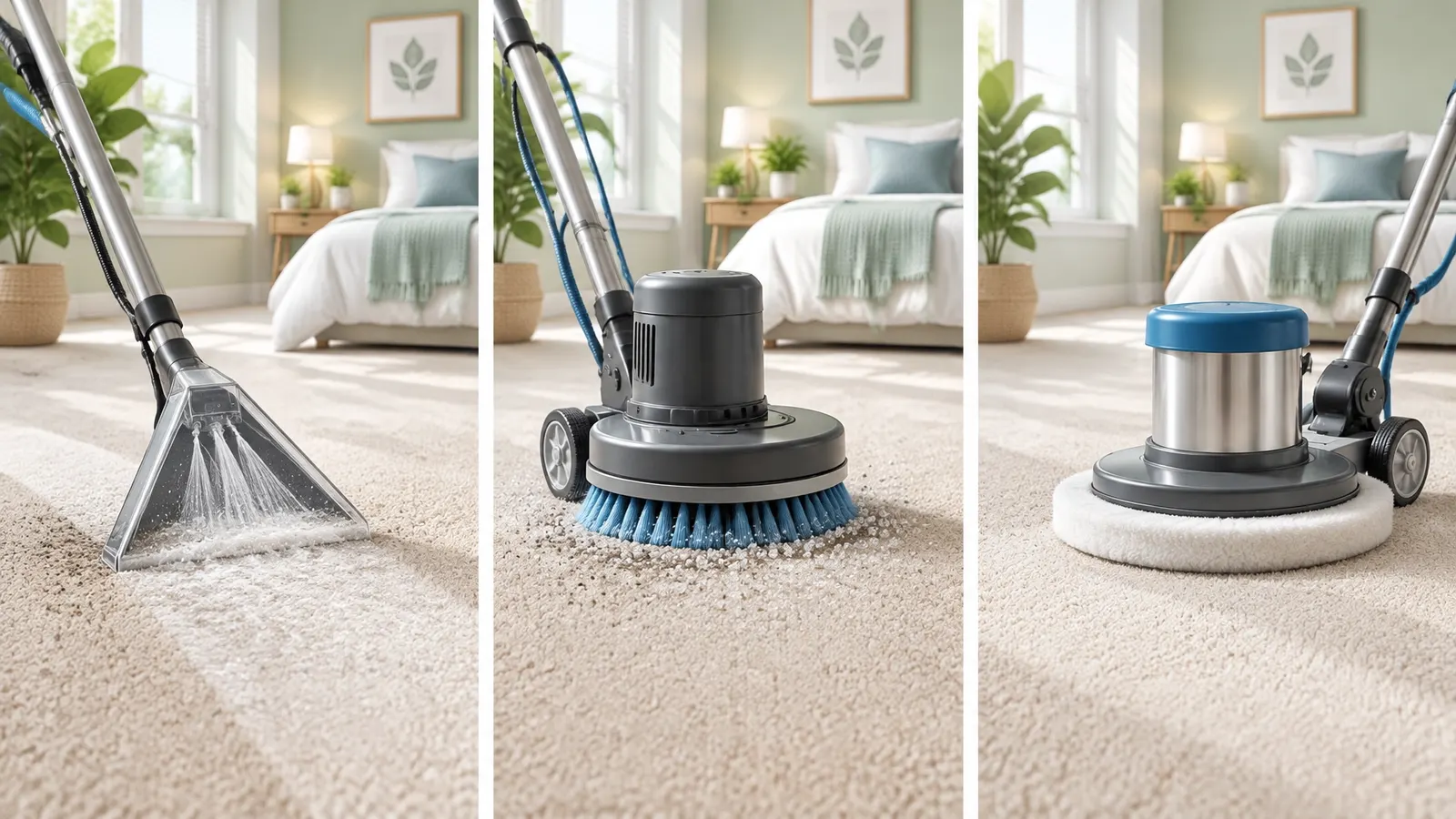
Choosing a carpet-cleaning method is a balancing act: you want to remove soil without damaging the carpet, leaving sticky residue, or keeping the room out of service longer than necessary. For homeowners and businesses comparing carpet cleaning Christiansburg options, the best method depends on the carpet’s construction, how dirty it is, and how quickly the space needs to be used again.
Here’s how hot water extraction, encapsulation, and bonnet cleaning compare, and what to ask before booking.
At a glance: the three methods
| Method | How it works | Typical drying or return-to-use time* | Best fit | Main consideration |
|---|---|---|---|---|
| Hot water extraction | Applies cleaning solution and hot water, then extracts water and suspended soil | Often several hours; allow around 6–12 hours as a cautious residential planning range | Deep or restorative cleaning in homes and commercial spaces | Thorough extraction and airflow matter |
| Encapsulation | Agitates low-moisture cleaning solution into carpet; dried, crystallized soil is later vacuumed away | Often about 30–60 minutes under favorable conditions | Routine commercial maintenance and faster reopening | Not usually a substitute for deep extraction |
| Bonnet cleaning | Uses a rotating absorbent pad to clean the carpet surface | Often comparatively quick, but depends on conditions | Limited surface maintenance if the manufacturer approves | May leave deeper soil behind; can affect appearance or warranty |
*These are general estimates, not guarantees. Carpet type, humidity, airflow, equipment, cleaning procedure, and the amount of soil all affect results. Keep people and pets off the carpet until it is fully dry.
1. Hot water extraction: strongest choice for a deeper clean
Hot water extraction, often called “steam cleaning”, does not necessarily clean with steam. It typically applies hot water and cleaning solution to the carpet, then uses powerful suction to recover the liquid along with suspended soil. The amount of water used and how thoroughly it is extracted can vary by equipment and technician.
Advantages - A strong option for removing embedded soil and cleaning solution residues. - Often a good fit for carpet that has not had a restorative clean in a while. - Can suit many residential carpets when performed according to the carpet manufacturer’s care instructions.
Trade-offs - Usually requires more drying time than low-moisture methods. - Poor technique or inadequate extraction can leave excess moisture behind. - Rooms need to stay clear of foot traffic until the carpet is dry.
The Carpet and Rug Institute (CRI) advises following the carpet manufacturer’s instructions and using appropriate equipment and cleaning products. As a practical planning guide, CRI’s residential standard describes carpet drying within 12 hours as a target. Some manufacturers give shorter estimates under normal conditions, but actual drying varies, so ask the cleaner what conditions and equipment their estimate assumes.
For households with children, pets, or busy schedules, plan the work for a time when you can keep the cleaned area off-limits. Fans, air movers, ventilation, and suitable indoor temperature can help moisture evaporate.

2. Encapsulation: lower moisture for ongoing maintenance
Encapsulation uses a specialized cleaning solution that is worked into carpet fibers, often with mechanical agitation. As the solution dries, it forms crystals around soil; later vacuuming removes much of that dried residue. Because it uses less water than hot water extraction, it can be a practical option where fast return to use is important.
Advantages - Typically dries faster than hot water extraction. - Can work well as part of a planned commercial carpet-maintenance program. - Helps businesses clean carpeted areas with less disruption to the workday.
Trade-offs - It is generally a maintenance method, not the automatic choice for heavily embedded soil. - Post-cleaning vacuuming is important to remove the dried soil and solution. - Performance depends on correct product use, agitation, and regular upkeep.
Interface’s carpet-maintenance guidance gives approximately 30–60 minutes as a drying estimate for its encapsulation process under normal conditions, while noting that airflow, temperature, and humidity affect results. That is a manufacturer example, not a promise for every carpet or cleaning service. Some carpet makers recommend periodic hot water extraction alongside interim low-moisture cleaning.
For offices, the key question is whether encapsulation fits the carpet’s care instructions and the maintenance plan, not simply whether the carpet looks better right after cleaning.
3. Bonnet cleaning: fast surface attention, with important limits
Bonnet cleaning uses a rotary machine with a moist absorbent pad that moves across the carpet surface and picks up soil. It is sometimes chosen for its speed and relatively low moisture use, especially in commercial settings.
But a bonnet pad mainly addresses the surface. It may not remove deeper soil as effectively as extraction, and using the wrong product or technique can leave residue or alter the carpet’s appearance. Some manufacturers do not recommend bonnet cleaning for their carpets. Shaw, for example, advises against bonnet cleaning in its maintenance guidance.
Consider bonnet cleaning only if: - The carpet manufacturer explicitly allows it for that carpet. - You understand that it may be an interim surface-cleaning approach. - The cleaner can explain how it protects the pile and avoids residue.
A quick-drying method is not automatically the safest method. Check the manufacturer’s instructions and warranty before approving bonnet cleaning.
Which method should you choose?

Choose hot water extraction when: - The carpet is heavily soiled or due for a deeper clean. - You can keep the room clear while it dries. - The carpet manufacturer approves extraction and the cleaner can explain their moisture-control process.
Choose encapsulation when: - You manage an office or other commercial space with recurring carpet care needs. - A short service interruption matters. - The carpet’s maintenance instructions allow the method and you have a plan for regular vacuuming and periodic deep cleaning.
Consider bonnet cleaning only when: - The carpet manufacturer specifically approves it. - You need surface-level interim cleaning, and the cleaner explains its limitations. - The goal is not to replace a recommended deep-cleaning method.
Not sure? Start by identifying the carpet brand or checking its care label or warranty. Then ask the cleaning provider:
- Which method does the manufacturer recommend for this carpet?
- What drying time should I plan for in this room and season?
- How will you avoid excess moisture and cleaning residue?
- When can children, pets, employees, or customers safely walk on it?
- Is this a deep clean or interim maintenance, and what follow-up care is needed?
The IICRC’s S100 standard covers professional carpet-cleaning principles, including inspection, cleaning methods, equipment, and safety. These standards and the carpet maker’s instructions are useful guides; a provider should be able to explain how the chosen method fits your specific carpet.
Residential homes vs. busy commercial spaces
For a home in Christiansburg or Blacksburg, a deeper clean may be the priority, especially in family rooms, bedrooms, or areas affected by everyday spills and foot traffic. Ask about dry time in advance so you can plan around children, pets, and furniture. For general home upkeep, learn more about house cleaning services in Blacksburg.
An office or retail space may have a different priority: keeping carpet presentable without closing the space for long. Encapsulation can be a useful maintenance option for suitable carpets, while periodic extraction may be appropriate when the carpet needs a deeper reset. If you’re comparing carpet cleaning Roanoke options for a business, ask how the proposed method fits your carpet manufacturer’s care requirements and operating hours. You can also explore commercial cleaning in Christiansburg.

The bottom line
For many carpets, hot water extraction is the stronger choice when deep soil removal is the priority and drying time can be managed. Encapsulation can make sense for routine commercial maintenance when a fast return to use matters. Bonnet cleaning is more limited: check the carpet’s care instructions before choosing it, and don’t treat quick surface results as proof of a deep clean.
When comparing carpet cleaning Christiansburg providers, look beyond the method name. Confirm that the approach suits your carpet, ask for a realistic drying estimate, and keep people and pets off the carpet until it is completely dry. For guidance on cleaning options for your property, review our commercial cleaning services in Christiansburg or residential cleaning services in Blacksburg.